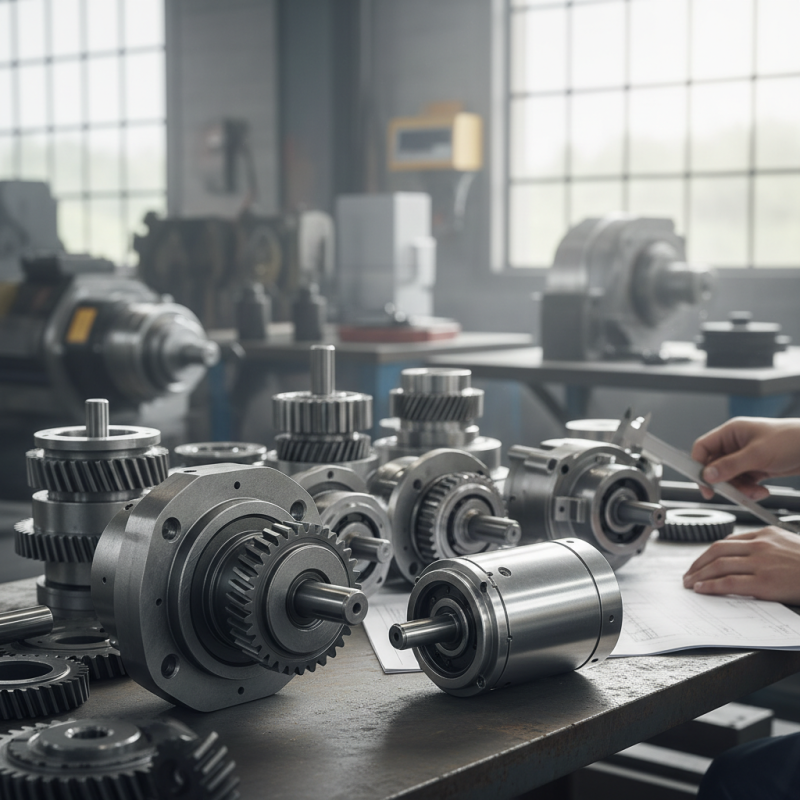
How to Choose the Right Cylindrical Gearbox for Your Needs?
Choosing the right Cylindrical Gearbox requires careful consideration of various factors. These gearboxes are crucial in numerous mechanical applications, ranging from industrial machinery to automotive systems. Selecting the right one can significantly enhance performance and efficiency.
When evaluating a cylindrical gearbox, think about your specific needs. Load capacity, speed requirements, and space constraints are all important. Additionally, the materials and construction should meet your operational demands. Reliable manufacturers often provide detailed specifications to guide your choice.
It's important to remember that not all gearboxes will be perfect for your situation. Some options may offer better torque but weigh too much for your setup. Others may be more compact but cannot handle the necessary loads. Reflecting on these aspects can lead you to a more informed decision.
Understanding the Types of Cylindrical Gearboxes in Industrial Applications
When selecting a cylindrical gearbox, it's crucial to understand the various types and their applications. These gearboxes are widely used in industries, serving distinct purposes. For instance, helical gearboxes offer smooth and quiet operation. They are ideal for high-speed applications, such as conveyors. Their teeth are angled, allowing for gradual engagement. This feature reduces noise and wear, but they can be more expensive.
On the other hand, spur gearboxes are the most common type. They feature straight teeth and provide high efficiency. These gearboxes are suitable for low-speed, high-torque applications, like in mining or material handling. Despite their reliability, they can generate more noise. It's important to weigh the pros and cons. You might find helical gearboxes quieter but costlier.
In some situations, worm gearboxes could be more advantageous. They offer a higher torque ratio and can handle back-driving. However, this design may lead to lower efficiency. Understanding these differences can shape your decision. Consider your specific needs and constraints. Selecting the appropriate gearbox is not always straightforward. Each type brings its own benefits and challenges that need careful evaluation.
Key Considerations for Load Capacity and Torque Requirements
Choosing the right cylindrical gearbox involves understanding your load capacity and torque requirements. Load capacity refers to how much weight the gearbox can handle. It is essential not to overlook this aspect. Underestimating the load can lead to equipment failure. Consider the application's demands carefully.
Torque is equally important. This metric defines how much twisting force the gearbox can exert. Evaluate the operational environment. High-torque applications may need special considerations. For example, fluctuating loads may require a gearbox with adjustable torque capabilities.
Sometimes, the right choice isn't immediately clear. Testing under real conditions can reveal hidden issues. Regular monitoring of gearbox performance helps in identifying potential weaknesses. These insights are invaluable for long-term reliability. Each project has unique challenges that require tailored solutions. Do thorough research and consultations if needed.
Evaluating the Efficiency and Performance Ratings of Gearbox Options
When evaluating the efficiency and performance of cylindrical gearboxes, it's essential to consider various factors. Efficiency ratings can often be influenced by design and materials. For example, gearboxes made from high-strength aluminum alloys typically offer efficiency ratings around 94-97%. This can lead to considerable energy savings in industrial applications. However, performance is not solely about numbers; real-world conditions may impact results.
Another critical aspect is the load capacity of the gearbox. A gearbox rated for heavy loads might perform inefficiently if not properly matched to its motor counterpart. In fact, gearboxes that operate below their rated torque can experience premature wear. Studies suggest that nearly 30% of gearbox failures are due to improper loading conditions. Therefore, analyzing operational parameters is crucial, as empirical data reveals a significant performance drop when misalignment or excessive vibrations occur.
Temperature is also a significant player in performance ratings. Elevated temperatures can reduce lubrication effectiveness, resulting in lower efficiency. Reports indicate that for every 10°C increase in temperature, the life of the lubricant can decrease by 50%. This not only alters efficiency but can jeopardize machinery longevity. Hence, users should regularly monitor operating conditions to ensure optimal performance and reliability.
Assessing Size and Weight Constraints for Specific Applications
When selecting the right cylindrical gearbox, understanding size and weight constraints is crucial. Each application poses its own unique challenges. A compact design can save space, particularly in tight environments. However, reducing size often impacts durability and load-bearing capacity. Therefore, balancing these aspects is critical.
Consider the specific requirements of your application. An aerospace application demands a lightweight gearbox that can still withstand high torque. In contrast, industrial machinery might prioritize heavier designs for stability. Engineers must evaluate not only dimensions but also the materials. Aluminum is often lighter, while steel provides higher strength.
It's worth acknowledging that choosing the wrong size can lead to performance issues. An oversized gearbox might create unnecessary weight, affecting efficiency. Alternatively, a smaller unit could struggle under high loads, leading to failure. Make careful calculations, and don’t overlook the importance of proper integration with existing systems. Each decision has a ripple effect, impacting overall performance and reliability.
Selecting the Appropriate Material and Design for Longevity and Durability
When selecting a cylindrical gearbox, material choice is crucial for ensuring longevity and durability. Research shows that around 30% of gearbox failures are due to inadequate material properties. Common materials include steel and aluminum, each with distinct advantages. Steel offers excellent strength and wear resistance, while aluminum is lightweight, enhancing energy efficiency. The choice should reflect the application's demands.
Design also plays a vital role. For instance, a gearbox designed with proper lubrication channels can decrease friction by up to 50%. This reduction directly impacts the lifespan of the gearbox. Calculations reveal that every 10-degree decrease in operating temperature can double the life of the gearbox. Thoughtful design minimizes stress concentrations, which are common failure points.
It's important to recognize that not all designs will suit every application. Some users report underestimating the importance of operating conditions, leading to unexpected downtime. While it's easy to rely on standard specifications, unique environments often necessitate tailored solutions. Balancing material properties and design features is key, but the process requires ongoing reflection and adaptation to specific needs.
Material Selection for Cylindrical Gearboxes