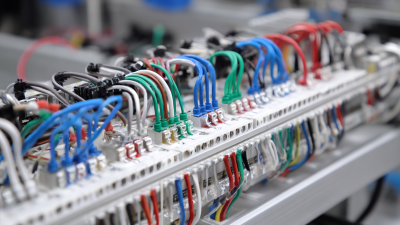
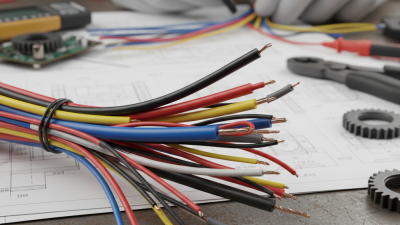
Choosing a wire harness assembly partner is not simply a price comparison. It is a risk decision.
Market reports show why this category deserves closer attention. MarketsandMarkets estimates the global wiring harness market will grow from about USD 90 billion in 2023 to more than USD 116 billion by 2028. Grand View Research also projects steady expansion through 2030. However, estimates differ. Their scopes include different vehicle, industrial, and electronics segments. Buyers should check the methodology before trusting any headline figure.
The pressure is visible on the factory floor. Electric vehicles require longer cable paths, higher-voltage insulation, tighter routing, and stronger traceability. A rejected terminal can stop an entire production line. A missing cavity seal can create failures months later. Small details matter.
Dean H. Allain, founder of Lectromec, has repeatedly stressed a practical principle: “The reliability of a harness depends on every connection.” That warning remains relevant for global sourcing. Strong manufacturers should demonstrate controlled crimp height, verified pull-force results, continuity testing, and documented material lots. ISO 9001 helps, but certification alone proves little about daily process discipline.
This guide evaluates leading wire harness assembly manufacturers through measurable evidence. It considers engineering support, prototype speed, production capacity, inspection systems, geographic coverage, and communication quality. Supplier rankings can still be imperfect. Public information is uneven, and factory capability may change after an audit. Buyers should request recent samples, process records, and customer references before signing long-term agreements.
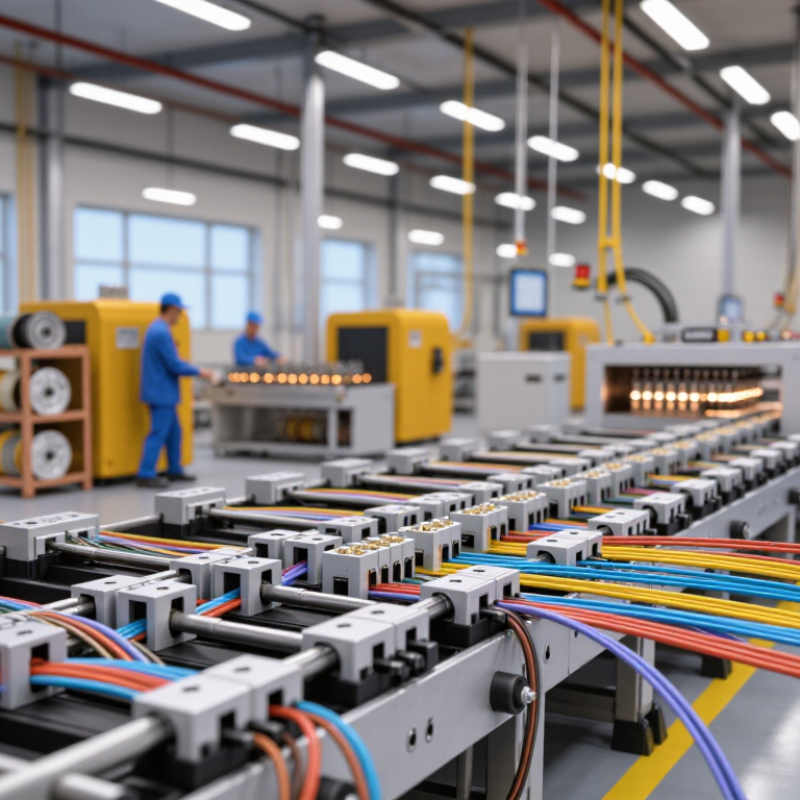
IPC/WHMA-A-620 defines acceptance criteria for wire harness workmanship. Its three classes match the product’s intended use, not a simple “good, better, best” ranking. Class 1 suits general electronics with limited performance risk. Class 2 supports dedicated service, where continued operation matters. Class 3 applies to high-reliability systems, including equipment exposed to vibration, heat, or difficult maintenance conditions. The difference is practical. A loose terminal, exposed conductor, or damaged insulation may require different decisions under each class.
Look closely.
A 2024 Grand View Research market assessment estimates the global wire harness market will grow at about 6.9% annually through 2030. That growth increases pressure on suppliers to prove consistent workmanship, not only attractive pricing. Buyers should request documented crimp-height control, conductor pull-force results, continuity testing, and traceable inspection records. In Class 3 production, small defects can become intermittent failures after repeated bending or thermal cycling. Experience also shows a difficult truth: a harness can pass continuity testing and still contain poor strain relief. Standards guide acceptance, but drawings, materials, tooling, and operator training must align. The classification is useful, yet it cannot replace engineering judgment.
Reliable wire harness sourcing starts with disciplined supplier screening. ISO 9001 shows that a manufacturer controls quality processes, records, and corrective actions. Check the certificate scope carefully. It should cover the actual production site and relevant harness activities. An expired certificate is a warning sign. IATF 16949 matters strongly for automotive programs. It indicates stronger controls for risk management, traceability, process capability, and customer-specific requirements. However, certification alone cannot replace an on-site audit.
UL 758 applies to appliance wiring material and helps verify construction, insulation, and flammability requirements. Confirm whether the supplier uses approved materials for your exact design. Ask for test records, material declarations, and change-control procedures. PPAP files should match the production process, not a laboratory sample. Review dimensional results, process flow, control plans, failure analysis, and capability data. Some suppliers provide polished documents but weak shop-floor discipline. That gap deserves attention.
Tips: Request a sample harness, then inspect crimp height, pull force, terminal locking, continuity, and insulation resistance. Ask how operators identify wire lots and tooling changes. Visit the factory if volume or safety risk is high. Keep questions specific. A small mistake can become expensive. Supplier screening is never perfect; even experienced buyers may overvalue certificates and overlook training, maintenance, or response speed. Evaluate evidence from documents, samples, audits, and daily communication together.
Choosing a wire harness assembly manufacturer requires more than comparing price lists. AWG range, production capacity, and end-market experience reveal operational strength. A supplier handling 2–32 AWG can support delicate sensor leads and heavier power circuits. However, AWG coverage alone can mislead.
In supplier audits, I check whether stated capacity means monthly assemblies, wire-processing volume, or theoretical machine output. These figures are not always presented clearly. A reliable manufacturer should provide production records, equipment details, inspection procedures, and realistic lead times. Ask about terminals, seals, connectors, overmolding, and automated testing. Small details matter.
End-market experience also affects design quality. Automotive programs may require vibration resistance, traceability, and high-volume consistency. Industrial automation often demands flexible routing and reinforced strain relief. Medical equipment needs controlled processes and documented inspection. Telecommunications projects may prioritize compact layouts and stable signal performance. Aerospace work usually requires stricter material control and extensive records. The best match depends on your assembly’s actual environment, not the broadest catalog. I have seen technically capable suppliers struggle when a product moves from prototypes to mass production. Capacity must be proven at your required volume, not simply advertised. A thoughtful comparison includes sample approval, process capability, change-control discipline, and communication across time zones. Mistakes still happen, so corrective action speed deserves equal attention.
| Manufacturer Profile | Typical Conductor AWG Range | Assembly Capacity Category | Core Manufacturing Capabilities | Primary End Markets | Compliance and Quality Systems | Common Production Regions | Best Fit for Global Buyers |
|---|---|---|---|---|---|---|---|
| Profile A High-Volume Automotive |
20–4 AWG Selected battery cables up to 2/0 AWG |
High volume More than 1 million assemblies per year |
Automated cutting and stripping, crimp-force monitoring, ultrasonic welding, connector insertion, continuity testing, and end-of-line electrical testing | Passenger vehicles Commercial vehicles Body electronics Battery systems | Automotive quality management, process traceability, PPAP support, RoHS, REACH, and IATF-aligned production practices | East Asia, Southeast Asia, Eastern Europe, and North America | Global vehicle platforms requiring repeatable production, automated inspection, and long-term supply continuity |
| Profile B Industrial Control Specialist |
30–10 AWG Control and sensor conductors |
Medium to high volume Approximately 100,000–1 million assemblies per year |
Multi-branch harnesses, ferrule crimping, terminal block wiring, DIN-rail assemblies, panel harnesses, labeling, and 100% continuity testing | Factory automation Robotics PLC panels Process equipment | ISO 9001-based quality systems, UL-recognized components where specified, RoHS, REACH, and documented inspection procedures | Central Europe, China, Mexico, and Southeast Asia | OEM control cabinets and machine builders needing flexible configurations and short engineering cycles |
| Profile C Medical and Laboratory |
28–10 AWG Fine-strand and low-noise cable options |
Low to medium volume Prototype through approximately 250,000 assemblies per year |
Fine-wire processing, overmolding, shielding, twisted pairs, custom connectors, clean assembly areas, visual inspection, and complete lot traceability | Diagnostic equipment Patient monitoring Laboratory instruments Imaging systems | ISO 9001 and ISO 13485-oriented systems, controlled documentation, biocompatibility review when applicable, RoHS, and REACH | North America, Western Europe, Ireland, and selected Asian production hubs | Regulated equipment manufacturers requiring design history support, traceability, and controlled change management |
| Profile D Heavy Equipment and Off-Highway |
18–2 AWG Power cables commonly up to 4/0 AWG |
Medium to high volume Approximately 250,000–1 million assemblies per year |
Large-gauge crimping, sealed connectors, conduit and abrasion protection, branch harnesses, battery cables, pull testing, and environmental validation support | Construction machinery Agricultural equipment Mining vehicles Material handling | ISO 9001 or IATF-based systems, IP-rated connector validation, RoHS, REACH, and documented crimp cross-section controls | North America, Mexico, Europe, India, and Southeast Asia | Equipment platforms exposed to vibration, moisture, dust, temperature changes, and high-current loads |
| Profile E Telecommunications and Data |
26–18 AWG Shielded and paired conductors |
High volume More than 1 million assemblies per year |
Ribbon cable processing, modular connectors, twisted-pair preparation, shielding termination, fiber-electrical hybrid integration, and automated testing | Network equipment Data centers Industrial Ethernet Wireless infrastructure | ISO 9001, RoHS, REACH, cable performance testing, controlled impedance requirements where specified, and lot-level traceability | China, Taiwan, Vietnam, Malaysia, Mexico, and Eastern Europe | High-repeatability data and communication products with strict signal-integrity and delivery requirements |
| Profile F Aerospace and Defense |
26–2 AWG Specialty high-temperature and shielded wire |
Low to medium volume Prototype, qualification, and serialized production |
Complex routing, shield termination, backshell assembly, laser marking, controlled tooling, harness board assembly, pull testing, and detailed inspection records | Aircraft systems Avionics Defense electronics Unmanned systems | AS9100-oriented quality systems, ESD controls, configuration management, material traceability, RoHS where applicable, and customer-specific qualification requirements | United States, Western Europe, Canada, Israel, and selected Asia-Pacific locations | Mission-critical programs requiring controlled processes, serialized documentation, and engineering collaboration |
| Profile G Consumer and Appliance |
24–10 AWG Low-voltage and mains wiring options |
Very high volume Several million assemblies per year |
Automated wire processing, connector insertion, heat-shrink application, clips and retainers, poka-yoke fixtures, visual inspection, and high-speed testing | Home appliances HVAC equipment Consumer electronics Lighting | ISO 9001, RoHS, REACH, applicable appliance safety requirements, UL or equivalent component controls, and production traceability | China, Vietnam, Thailand, Malaysia, Mexico, and Eastern Europe | Cost-sensitive products requiring high throughput, stable tooling, and consistent connector availability |
| Profile H Energy Storage and EV Power |
16–1 AWG High-voltage cables from approximately 10–70 mm² |
Medium to high volume Approximately 100,000–1 million assemblies per year |
High-voltage interconnects, busbar-linked harnesses, shielded power cables, HVIL circuits, sealed connectors, thermal management wiring, and insulation testing | Electric vehicles Battery packs Charging equipment Stationary storage | Automotive or industrial quality systems, high-voltage safety controls, insulation resistance testing, RoHS, REACH, and customer-specific validation requirements | China, South Korea, Japan, Europe, North America, and Southeast Asia | Electrification programs requiring high-current capability, electrical safety controls, and scalable production capacity |
Quality starts with measurable controls, not attractive catalogs. The automotive wiring harness market reached approximately USD 59.7 billion in 2023, according to Fortune Business Insights. That scale increases pressure on manufacturers to prove consistency across plants, shifts, and production lots.
A reliable supplier should verify 100% continuity on every finished harness. This test confirms that each circuit connects correctly and avoids open or crossed wires. It is simple, but weak fixture maintenance can create false confidence. Hipot testing adds another safety layer by checking insulation resistance under a specified high voltage. Test voltage, dwell time, leakage limits, and results should remain linked to each serial number.
Traceability must reach the operator, material lot, tooling setup, and test record. IPC/WHMA-A-620 provides widely used workmanship criteria for cable and harness assemblies, while IEC 60512 supports electrical test methods. These references help buyers compare suppliers using evidence rather than promises.
Ask for controlled work instructions and calibration records. Request failure-rate trends, not only pass certificates. A mature factory can explain rework causes, corrective actions, and recurring defects. Not every supplier reports these details clearly. That is a warning worth investigating. Digital records also reduce manual transcription errors, although poorly maintained systems can still produce incomplete histories. Global buyers should audit the process behind the certificate, especially when safety-critical harnesses cross borders.
Selecting a wire harness assembly manufacturer requires more than comparing unit prices. MOQ can affect inventory, tooling, and cash flow. A supplier offering 100-piece batches may suit product testing, while mass production may require higher volumes. Confirm whether terminals, connectors, labels, and testing are included. Lead time also needs detail. Ask for sample timing, production capacity, inspection points, and shipping preparation. A reliable manufacturer should provide a written schedule, not only a promising message.
Incoterms can change the real purchase cost. Under FOB, the buyer usually manages main freight and insurance. Under DDP, duties and delivery may be included, but customs responsibilities must remain clear.
Check compliance documents for material safety, traceability, restricted substances, and destination-market requirements. Do not accept a certificate without checking its scope and date.
Total cost includes tooling, packaging, freight, duties, testing, rework, and potential delays. A cheaper harness can become expensive after one failed inspection.
Tips: Request a sample quotation with identical specifications. Compare copper size, insulation, connector quality, test coverage, MOQ, lead time, and Incoterms line by line. Keep a contingency for design changes. Even careful sourcing can miss a small fee. That is worth reviewing. A factory audit, process sample, and pilot order can reveal problems before full production. Consistent records matter more than impressive claims.