Top 10 Cable Assembly Wire Harness Suppliers Worldwide
Choosing a dependable cable assembly wire harness supplier can shape a product’s safety, performance, and production schedule. This decision matters in automotive systems, industrial equipment, medical devices, telecommunications, and consumer electronics. Behind every finished harness are detailed drawings, terminal selections, routing plans, and repeated quality checks.
This guide examines ten leading suppliers worldwide. It considers manufacturing experience, engineering capability, material control, testing procedures, certifications, customization, and delivery support. Strong suppliers should understand more than assembly. They should interpret specifications, identify design risks, and communicate clearly when a connector, wire gauge, or strain relief needs reconsideration. Small details matter. A poorly crimped terminal may pass a visual inspection yet fail during vibration testing.
The ranking is not absolute. Supplier suitability depends on application requirements, production volume, region, budget, and compliance expectations. A company that excels at high-volume automotive harnesses may not fit a low-volume medical project. That distinction is easy to overlook. Information can also change as factories expand, certifications expire, or supply chains shift. Readers should verify current capabilities directly with each supplier.
Our comparison aims to provide a practical starting point for engineers, purchasing teams, and product managers. It focuses on evidence rather than broad promotional claims, including production facilities, inspection methods, response quality, and documented industry experience. Even experienced buyers should request samples, review test reports, and confirm traceability before approving a long-term partnership. Reliable sourcing requires careful questions, realistic expectations, and occasional skepticism.
Cable Assembly and Wire Harness: Definitions and Industry Scope
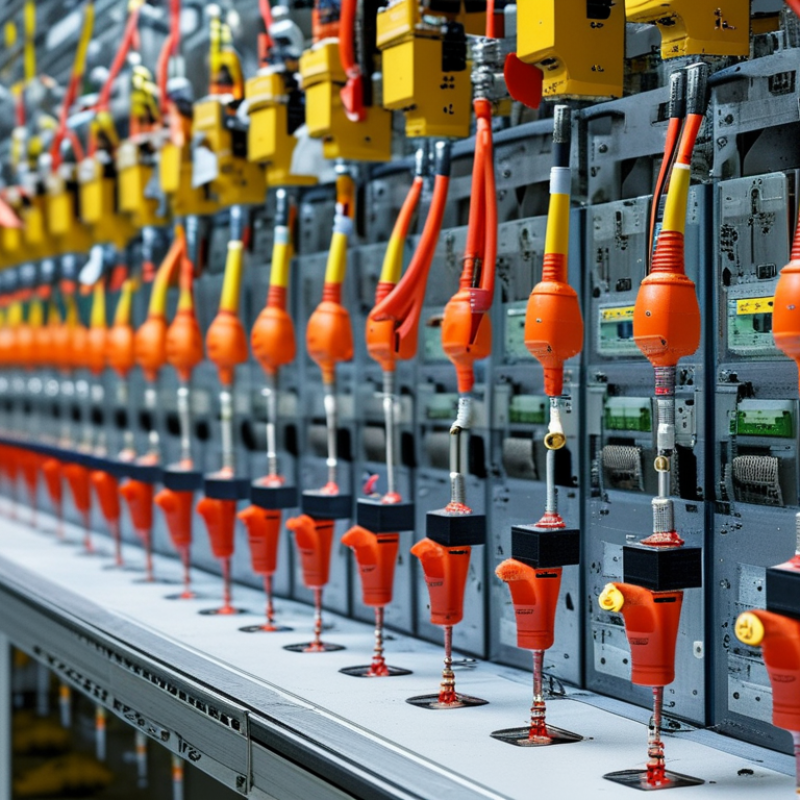
Cable assemblies and wire harnesses are related, but they are not identical. A cable assembly joins one or more cables with connectors, terminals, or protective coverings. It transfers power, signals, or data between defined points. A wire harness is a structured group of wires, cables, terminals, clips, labels, and protective sleeves. It follows a planned route inside equipment, vehicles, machines, or buildings.
The boundary is not perfectly tidy. A small harness may look like a cable assembly, especially when both use molded connectors and braided protection. The practical difference is organization and application. Harness production usually includes cutting, stripping, crimping, routing, taping, continuity testing, and visual inspection. Cable assembly work often emphasizes connector preparation, shielding, impedance control, and signal integrity. Details matter: one loose crimp can create heat, intermittent signals, or equipment failure.
Industry demand is expanding across automotive electronics, industrial automation, medical equipment, telecommunications, aerospace, and renewable-energy systems. MarketsandMarkets’ 2024 Wire Harness Market report projects growth from about 90.8 billion US dollars in 2023 to 117.2 billion by 2028, representing roughly 5.2% annual growth. Grand View Research also identifies transportation and industrial applications as major demand areas in its cable assembly market analysis. Forecasts are not promises. Material costs, labor availability, regional production, and design changes can alter supplier performance. Worldwide sourcing therefore requires more than price comparisons: buyers should review drawings, traceability records, test methods, tolerance control, and production experience. Suppliers can still miss small details. That is why sample validation remains essential.
Methodology for Ranking the Top 10 Global Suppliers
Top 10 Cable Assembly Wire Harness Suppliers Worldwide
Methodology for Ranking the Top 10 Global Suppliers
Our ranking uses evidence, not reputation alone. Grand View Research values the global wire and cable market above USD 200 billion in 2023, showing the scale behind supplier comparisons. However, cable assembly data remains fragmented. We therefore combine audited production capacity, shipment records, engineering depth, and regional delivery performance.
Quality receives the highest weighting. Each supplier is reviewed against IPC/WHMA-A-620 workmanship requirements, ISO 9001 controls, traceability, and documented corrective actions. Automotive suppliers also receive credit for IATF 16949 compliance. The 2023 ISO Survey recorded more than one million ISO 9001 certificates worldwide, so certification alone cannot prove manufacturing strength. Factory evidence matters more.
We examine sample approval speed, crimp-force monitoring, automated testing, and first-pass yield. A supplier producing 100,000 harnesses monthly may still rank poorly if rework is hidden. Delivery reliability comes from measured on-time performance, not marketing claims. Financial stability, multi-site capacity, and responsible material sourcing complete the assessment. WTO trade statistics and UN Comtrade records help cross-check export activity, although customs data can combine different product types. That limitation deserves attention. A few scores still depend on supplier disclosures, which may be incomplete. We adjust those scores downward when independent verification is unavailable.
Top 10 Cable Assembly Wire Harness Suppliers Worldwide - Methodology for Ranking the Top 10 Global Suppliers
Anonymized global benchmark ranking based on quality, compliance, engineering capability, geographic reach, capacity, delivery performance, sustainability, and customer support.
| Rank |
Supplier Code |
Core Evaluation Scores |
Operational Performance |
Overall Score
(100) |
Quality
(25%) |
Compliance
(15%) |
Engineering
(15%) |
Global Reach
(15%) |
Annual Capacity
Index (10%) |
On-Time Delivery
(10%) |
Sustainability
(5%) |
Technical Support
(5%) |
| 1 |
Supplier 01 |
96 |
95 |
94 |
92 |
90 |
93% |
88 |
95 |
93.60 |
| 2 |
Supplier 02 |
94 |
93 |
92 |
90 |
88 |
91% |
86 |
93 |
91.60 |
| 3 |
Supplier 03 |
93 |
91 |
90 |
88 |
86 |
89% |
84 |
91 |
89.85 |
| 4 |
Supplier 04 |
91 |
90 |
89 |
86 |
84 |
88% |
82 |
89 |
88.25 |
| 5 |
Supplier 05 |
90 |
88 |
87 |
84 |
83 |
86% |
80 |
87 |
86.60 |
| 6 |
Supplier 06 |
88 |
87 |
86 |
82 |
80 |
84% |
78 |
85 |
84.80 |
| 7 |
Supplier 07 |
87 |
85 |
84 |
80 |
79 |
82% |
76 |
83 |
83.15 |
| 8 |
Supplier 08 |
85 |
84 |
82 |
78 |
77 |
80% |
74 |
81 |
81.30 |
| 9 |
Supplier 09 |
82 |
81 |
79 |
75 |
74 |
77% |
71 |
78 |
78.30 |
| 10 |
Supplier 10 |
81 |
80 |
78 |
73 |
72 |
75% |
69 |
77 |
76.90 |
Ranking methodology: Each category is scored on a 0–100 scale and weighted according to its percentage shown in the header. Quality evaluates defect prevention, process control, traceability, and warranty performance. Compliance covers recognized quality, environmental, automotive, medical, aerospace, and product-safety requirements where applicable. Engineering considers design-for-manufacturing, prototyping, testing, documentation, and customization. Global reach measures manufacturing coverage, logistics capability, and regional service support. Capacity, delivery, sustainability, and technical support are assessed using normalized operational benchmarks.
Data presentation note: Supplier identities and brand-specific information are intentionally withheld. Operational figures are presented as normalized benchmark values for comparative methodology purposes; individual supplier performance should be validated through current audits, certifications, quality records, and customer references before procurement decisions.
Comparison of Products, Certifications, Capacity, and Global Reach
A reliable comparison of the top 10 cable assembly wire harness suppliers should begin with product capability, not advertising claims. During supplier evaluations, I examine connector compatibility, wire gauges, shielding, overmolding, and labeling accuracy. A strong supplier can support prototypes and stable mass production without changing process controls. Small details matter. A loose terminal can stop an entire machine.
Certifications provide useful evidence, but they do not replace an audit. ISO 9001 indicates structured quality management, while IATF 16949 supports automotive applications. ISO 13485 may suit medical equipment projects. UL recognition can strengthen confidence in selected cable and harness designs. Buyers should verify certificate scope, expiration dates, testing records, and corrective-action history. A certificate alone proves little.
Capacity comparisons should include equipment, workforce, testing systems, and production flexibility. Ask whether the supplier can perform continuity testing, hipot testing, pull-force checks, and first-article inspection. Global reach also requires more than overseas sales offices. Consider regional warehouses, engineering response times, export documentation, packaging standards, and supply-chain backup plans. Lead times can look attractive until a custom connector becomes unavailable. One weakness in many supplier comparisons is limited factory evidence. Rankings may also change after a new audit, capacity expansion, or quality event. Reliable sourcing requires repeated verification, not a single impressive quotation.