Choosing the right Well Control Box is crucial for safety in drilling operations. Understanding its features ensures compliance and efficiency. Buyers often overlook key elements that significantly impact performance.
A Well Control Box is a critical component. It controls pressure and maintains safe operations. Not all boxes are created equal, and not all buyers know what to look for. The features can vary greatly in quality and functionality.
In this guide, we will explore ten essential features of Well Control Boxes. Each feature plays a vital role in ensuring reliability and effectiveness. As you delve into the details, ask yourself: does this meet industry standards? The answers may reshape your perspective on what to prioritize in your next purchase.
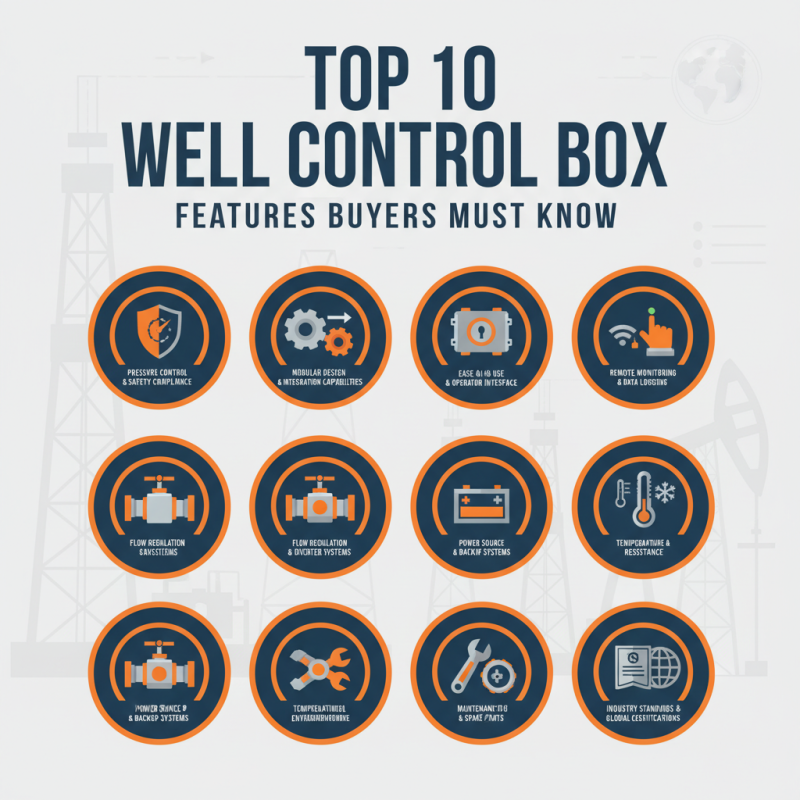
Choosing a well control box is crucial for safety in oil and gas operations. It's not just about functionality; it's about reliability and effectiveness under pressure. According to industry reports, nearly 30% of drilling incidents are linked to inadequate well control systems. This emphasizes the need for robust features in a control box.
Key considerations include the ease of use. A well-designed control box should offer intuitive controls, minimizing the risk of human error. Look for features like color-coded buttons and clear display screens. These can significantly reduce response times in emergencies. In addition, ensure the box is built with durable materials. Regular wear and tear can compromise its reliability.
When investing in a well control box, understanding its essential safety features is crucial. Well control boxes are designed to manage well pressure and prevent blowouts. A reliable box should have a robust pressure monitoring system. This system alerts operators to any abnormalities, allowing for quick responses.
**Tip:** Always check for alarms and shut-off controls. These features can save lives. An effective alarm system should be highly visible and audible. This ensures that all personnel can respond promptly to emergencies.
Another critical feature is the ability to conduct regular system tests. Well control boxes should facilitate routine checks on all safety components. Some features may falter over time, leading to potential hazards. Regular maintenance can help identify issues before they escalate.
**Tip:** Implement a maintenance log for tracking check-ups. This not only enhances safety but also builds reliability in operations. Be proactive about addressing any problems found during inspections. Investing effort into these practices ensures that the control box functions effectively when needed most.
| Feature | Description | Importance | Specifications |
|---|---|---|---|
| Automatic Shutoff | Automatically cuts off flow during emergencies. | Essential for preventing blowouts. | Response time < 1 second. |
| Pressure Monitoring | Continuous monitoring of pressure levels in real-time. | Critical for detecting abnormal conditions. | Monitoring range up to 15,000 psi. |
| Flow Rate Control | Adjusts fluid flow based on well conditions. | Ensures proper flow management for safety. | Range from 0 to 500 BPM. |
| Alarm Systems | Audible and visual alerts for anomalies. | Immediate response to critical conditions. | 120 dB alarm sound. |
| Data Logging | Records operational data for analysis. | Helps in understanding performance patterns. | Stores up to 1 million data points. |
| Emergency Shutdown | Manual or automated system to stop operations. | Prevents hazardous situations. | Activation time < 5 seconds. |
| User Interface | Intuitive display for ease of use. | Enhances operator efficiency. | Touchscreen with customizable layout. |
| Durability | Built to withstand harsh environments. | Ensures longevity and reliability. | IP66 rated enclosure. |
| Remote Monitoring | Access and control from remote locations. | Facilitates off-site management. | Web-based interface with cloud storage. |
| Power Redundancy | Multiple power sources to ensure operation. | Critical for uptime and safety. | Dual power supply system. |
Understanding operational controls and user interfaces in well control boxes is crucial for buyers. Effective design can enhance usability and safety in the field. A recent report by the Society of Petroleum Engineers indicates that over 60% of well control incidents arise from operator error. This emphasizes the need for intuitive controls.
Tip: Ensure training sessions focus on control layouts. Regular practice helps familiarize operators with equipment functions.
A user-friendly interface should feature clear labeling and responsive touchscreens. Research from the American Petroleum Institute suggests that simplified interfaces can reduce response times by 30%. Operators in high-stress situations benefit from well-organized controls. They can quickly access critical functions without confusion.
Tip: Engage frontline workers during design phases. Their insights can help identify practical usability concerns.
Firms that prioritize ergonomic design create safer environments. The interface should allow for quick access to key metrics, like pressure and temperature. However, it's essential to keep a balance; overly complicated displays may overwhelm users. In poorly designed systems, operators may misinterpret data, leading to risk.
Tip: Regularly review interface feedback from users. This will help in continuous improvement of the design.
When considering well control boxes, compatibility with existing drilling equipment is crucial. Data shows that more than 70% of drilling incidents occur due to equipment failures. Ensuring that the well control system integrates seamlessly with drill rigs and BOPs (Blowout Preventers) enhances safety and efficiency. In 2021, a report indicated that mismatched equipment led to an increase in operational downtime by 30%.
Proper alignment with drilling systems can minimize risks. A well control box must accommodate various pressures and fluid types. According to the International Association of Drilling Contractors, half of the drilled wells experience complexities tied to equipment incompatibility. These challenges emphasize the need for rigorous compatibility assessments before purchasing or installing a well control box.
Testing against industry standards is vital. A well control box must also feature adaptable interfaces. This allows for modifications and updates to meet evolving drilling technologies. While many products claim universality, real-world applications often expose limitations. Companies that focus on compatibility often see lower operational risks and improved drilling performance.
When considering well control boxes, maintenance and support are crucial. Regular checks ensure functionality. Misuse or inadequate upkeep can lead to significant risks. A well-maintained box can effectively prevent blowouts. The apparatus should undergo routine inspections, including pressure tests and component evaluations. This proactive stance mitigates potential failures.
User training also plays a vital role. Operators should be familiar with its features and common issues. Documentation should always be accessible. It should guide users on troubleshooting and routine maintenance practices. Yet, reliance on documentation alone can lead to problems. Hands-on training can sometimes offer deeper insights than manuals.
Moreover, support needs can vary depending on the application. Some installations may require more frequent servicing. Understanding this variability offers an edge. Each environment poses unique challenges. Regular dialogue with technicians can lead to better outcomes. There’s always room for improvement regarding maintenance schedules and equipment upgrades. A mindset focused on adapting to changing conditions can enhance overall safety.