Choosing the right harness manufacturing partner affects safety, delivery, cost, and long-term product performance. A polished sample is not enough. The real test begins when production reaches hundreds or thousands of assemblies.
A capable partner should explain its crimping process, wire preparation, terminal control, and inspection methods clearly. Ask to see actual production records, not only presentation slides. Look for calibrated pull-force testers, continuity equipment, labeled workstations, and traceable material lots. IPC/WHMA-A-620 familiarity is valuable for workmanship consistency. Automotive programs may also require IATF 16949 experience and strict change-control procedures.
Quality must live in the process.
W. Edwards Deming, a widely respected manufacturing quality expert, said, “Quality comes not from inspection, but from the improvement of the production process.” His principle applies directly to harness manufacturing. Final inspection can catch an open circuit, but it cannot repair a weak crimp hidden inside insulation. Your evaluation should include prototype builds, first-article reviews, and controlled pilot runs. Discuss wire routing, bend radius, sealing plugs, strain relief, and connector fit under real operating conditions.
Do not overlook communication. A reliable partner reports problems early, documents corrective actions, and protects agreed specifications. They should also explain capacity limits honestly. That answer may be less impressive, but more trustworthy.
Some decisions remain uncomfortable. The lowest quotation may exclude testing, tooling maintenance, or engineering support. A larger supplier may offer stronger systems but less attention. Review evidence, visit the facility when practical, and test the relationship before scaling. The right partner is not merely a vendor. It is a disciplined extension of your engineering and quality team.

Before choosing a harness manufacturing partner, define exactly what the harness must do. Describe its application, installation space, operating temperature, voltage, current, and expected service life. A harness inside a vibrating machine needs different protection than one used in a quiet indoor cabinet.
Measure the real assembly area. Include branch lengths, bend radius, connector orientation, and fixing points. Provide drawings, wiring diagrams, wire specifications, terminal types, and acceptable tolerances. If the design is still changing, state that clearly. My early specifications were too general, and small assumptions caused rework around connector locations. That mistake was avoidable.
Production requirements matter just as much. State prototype quantities, annual volume, delivery targets, packaging needs, and inspection expectations. Ask how continuity, insulation resistance, crimp height, and pull strength will be verified. Request sample records and clear approval procedures before production begins. A reliable partner should explain traceability, material control, process testing, and change management in practical terms. Do not accept vague answers.
Think about the difficult conditions. Will oil, moisture, heat, abrasion, or repeated movement affect the assembly? Identify those risks before requesting a quotation. Include applicable safety and regulatory requirements for the intended market. Keep one controlled specification, but review it with engineering, purchasing, and production teams. People often overlook service access. A harness that works on a test bench may be frustrating inside a crowded enclosure.
A reliable harness partner should explain its process, not merely display a polished sample. Ask how engineers select terminals, wire gauges, seals, and protective coverings for each application. Their answers should reflect practical knowledge of routing, bend radius, vibration, heat, and moisture exposure. Technical drawings must be reviewed carefully. Small errors can become expensive rework.
Request evidence from production. Useful records include crimp-height checks, pull-force tests, continuity tests, and insulation-resistance results. Ask whether operators use calibrated tools and whether each batch remains traceable to materials, machines, and inspection records. A capable facility should also describe its first-article process and explain how design changes are controlled. Clear evidence matters more than confident language.
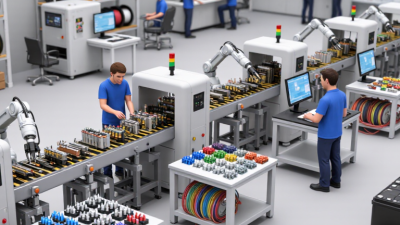
Walk through the production area if possible. Look for labeled workstations, controlled tooling, clean storage, and visual instructions beside operators. Review the real capacity, including wire processing, crimping, ultrasonic welding, testing, and final inspection. A supplier may have excellent engineers but limited capacity during peak demand. That gap can disrupt delivery.
Do not judge capability from one successful prototype. A pilot run often reveals uneven cutting, loose labels, or inconsistent branch lengths. Those problems are useful warnings, not automatic rejection reasons. Ask how the team investigates defects and prevents repetition. No audit is perfect. Your own specifications may also be unclear, especially around tolerances and inspection frequency. Strong partners raise these questions early, before production becomes difficult to correct.
How to Choose the Right Harness Manufacturing Partner?
Quality claims mean little without visible evidence. Ask the harness manufacturer which standards guide its processes, such as ISO 9001 or IATF 16949. Confirm that certificates are current, relevant, and issued by recognized bodies. For production control, review material traceability, crimp-height records, torque settings, and operator training logs. A reliable partner should explain how each result is recorded and corrected.
Testing must match the harness application. Request continuity, insulation resistance, high-voltage, pull-force, and dimensional testing when appropriate. Ask for sample test reports, calibration dates, and acceptance criteria. Compliance also requires careful review of customer specifications and applicable requirements, including material restrictions or industry standards. Do not accept a generic compliance statement. It may be incomplete.
Tips: Visit the facility if possible. Watch one harness move from wire cutting to final inspection. Check whether labels remain readable and terminals are fully locked. Ask how rejected parts are isolated. A clean factory helps, but it does not prove process control. Records matter more. In practice, even experienced teams can miss unclear drawings or changing specifications. Discuss revision control openly, and request a small trial build before full production. This reveals weak documentation, inconsistent crimping, or testing gaps early. Reliability is demonstrated through repeatable evidence, not confident promises.
Compare the strength of a supplier’s verification evidence across quality systems, testing, traceability, and compliance before approving a harness manufacturing partner.
Scoring guide: 0 = no documented evidence, 3 = basic documented controls, and 5 = independently verified, current, and consistently applied evidence. Request objective records such as ISO 9001 certification, crimp-force validation, electrical test results, material traceability, change-control records, and RoHS/REACH declarations.
Choosing a harness manufacturing partner requires more than comparing the quoted unit price. Review tooling, validation, inspection, freight, packaging, and engineering-change fees. Deloitte’s 2023 Global CPO Survey identified cost reduction as a top priority for 71% of procurement leaders. That pressure makes low bids attractive. They can become expensive after revisions, rejected samples, or urgent freight.
Lead time should include engineering review, prototype approval, material purchasing, production, testing, and shipment. Ask for measured lead-time data, not promises. Review historical on-time delivery rates and late-order causes. McKinsey Global Institute reports that companies can expect supply chain disruptions lasting one month or longer every 3.7 years. A partner should therefore explain backup plans for terminals, copper, terminals, and key labor.
Reliability needs visible evidence. Request lot traceability, crimp-force records, pull-test results, and workmanship controls aligned with IPC/WHMA-A-620. Compare capacity by shift, not by annual marketing figures. Check whether a second qualified source exists for critical components. One uncomfortable question matters: what happens when demand doubles next quarter? A supplier may pass every audit yet lack flexible labor or testing capacity. I would also inspect a recent production batch personally, because paperwork can look stronger than the work.
| Evaluation Dimension | Local / Nearshore Partner | Regional Specialized Partner | Global Full-Service Partner | What to Verify Before Selection |
|---|---|---|---|---|
| Typical application | Low-to-medium volume, frequent engineering changes | Medium-to-high volume, recurring production programs | High volume, multiple plants, strict global compliance | Confirm experience with the required wire types, terminals, seals, connectors, and testing standards |
| Estimated piece cost* | US$8–35 per harness | US$5–25 per harness | US$4–22 per harness | Compare like-for-like drawings, labor content, material specifications, packaging, freight, and inspection costs |
| Prototype tooling and fixtures | US$300–2,500; often faster customization | US$500–4,000; shared engineering resources | US$1,000–8,000; formal tooling approval process | Check ownership, maintenance responsibility, revision charges, and end-of-program tooling return terms |
| Minimum order quantity | Usually 25–250 units | Usually 100–1,000 units | Usually 500–5,000 units | Request MOQ by part number and identify price breaks for annual volume commitments |
| Prototype lead time | 5–15 business days | 10–25 business days | 15–35 business days | Ask whether the quoted time includes material procurement, tooling, first-article inspection, and shipping |
| Recurring production lead time | 2–5 weeks | 3–8 weeks | 4–10 weeks | Separate manufacturing lead time from component lead time and transportation time |
| Typical on-time delivery performance | 90–96% | 92–98% | 94–99% | Request 12-month delivery records and define whether performance is measured by requested date or confirmed date |
| First-pass yield | 96–99% | 97–99.5% | 98–99.8% | Verify crimp-force monitoring, continuity testing, pull-force testing, and traceability controls |
| Defect rate target | 500–2,000 PPM | 200–1,000 PPM | 50–500 PPM | Set an agreed PPM limit, corrective-action response time, and warranty or replacement policy |
| Component sourcing flexibility | Low-to-medium; often relies on approved local distributors | Medium-to-high; multiple qualified regional sources | High; broader multi-region sourcing network | Request an approved-vendor list, alternate-part process, and obsolescence-management procedure |
| Supply interruption recovery | Typically 2–6 weeks, depending on local inventory | Typically 3–8 weeks, with moderate buffer-stock capability | Typically 4–12 weeks, but broader contingency options | Evaluate safety stock, dual sourcing, business-continuity plans, and allocation priority during shortages |
| Engineering change response | 1–5 business days | 3–10 business days | 5–15 business days | Confirm engineering contact availability, revision control, sample approval, and change-cost responsibility |
| Recommended partner fit | Best for speed, communication, and smaller production runs | Best balance of cost, flexibility, and production capability | Best for scale, compliance, global logistics, and redundancy | Use a weighted scorecard based on total landed cost, launch risk, quality requirements, and forecast stability |
Choosing the right harness manufacturing partner requires more than comparing prices. Communication, technical support, and long-term fit often determine whether a project stays stable.
A capable partner explains design limits, material choices, testing steps, and delivery risks in plain language. Ask how quickly engineers respond when drawings change. Ask for evidence. Request sample reports, revision records, and a clear escalation process.
During a production trial, note who answers your questions and how carefully they document decisions. Slow replies can become costly delays.
Technical support should continue after the first shipment. Ask whether the partner helps investigate defects, improve assembly methods, and manage approved changes. A strong team will discuss root causes instead of hiding uncomfortable details. When problems appear, listen for practical answers, not vague promises. I have made the mistake of judging support by one friendly sales meeting. That lesson still matters.
Long-term fit depends on consistency. Review communication habits, quality records, engineering capacity, and capacity planning. Discuss how forecasts, urgent orders, and obsolete components will be handled. The right partner should challenge unclear requirements respectfully and protect agreed specifications. They should also admit when a request needs more testing or a revised timeline. Reliability grows through repeated actions, not polished introductions.