Choosing a reliable cable and wire harness supplier can shape an entire product’s performance. A weak connection may appear harmless during assembly. Months later, vibration, heat, or repeated bending can expose it.
This guide presents seven practical tips for evaluating potential suppliers. It focuses on more than price and attractive brochures. Look for clear engineering support, accurate drawings, suitable materials, and repeatable production controls. Ask how the supplier manages wire gauges, connector specifications, bend radius, shielding, and crimp quality. These details matter inside medical equipment, industrial controls, vehicles, and many other demanding products.
Experience offers useful clues. Request samples that match your real conditions, not only showroom pieces. Check labeling, terminal alignment, insulation quality, and strain relief by hand. Ask whether the supplier performs pull tests, continuity checks, and final visual inspections. Traceable records can also reveal how problems are handled. A supplier should explain lead times honestly, including possible delays for custom tooling or imported components.
A polished website is not proof. Neither is the lowest quotation. We have learned that small communication gaps can become expensive production issues. Still, no supplier is perfect. The better question is whether the company identifies mistakes quickly and corrects them transparently. These seven tips will help you compare capabilities, reduce avoidable risk, and build a more dependable sourcing decision. You may need to challenge your own assumptions, too. A familiar supplier is not automatically the right supplier.
Before comparing cable and wire harness suppliers, define the assembly’s working conditions in measurable terms. State the conductor count, wire gauge, insulation material, voltage, current, and required cable length. Include the operating temperature range and maximum bend radius. A harness inside a vibrating machine needs different construction from one installed in a dry control cabinet.
Describe every connection clearly. List connector types, pin assignments, locking features, shielding needs, and acceptable tolerance levels. Add photos, sketches, or a dimensioned drawing when possible. A rough sketch is not enough. Suppliers may interpret missing details differently, creating costly revisions later.
Mention exposure to moisture, oils, dust, movement, or repeated flexing. These details influence material selection and assembly methods.
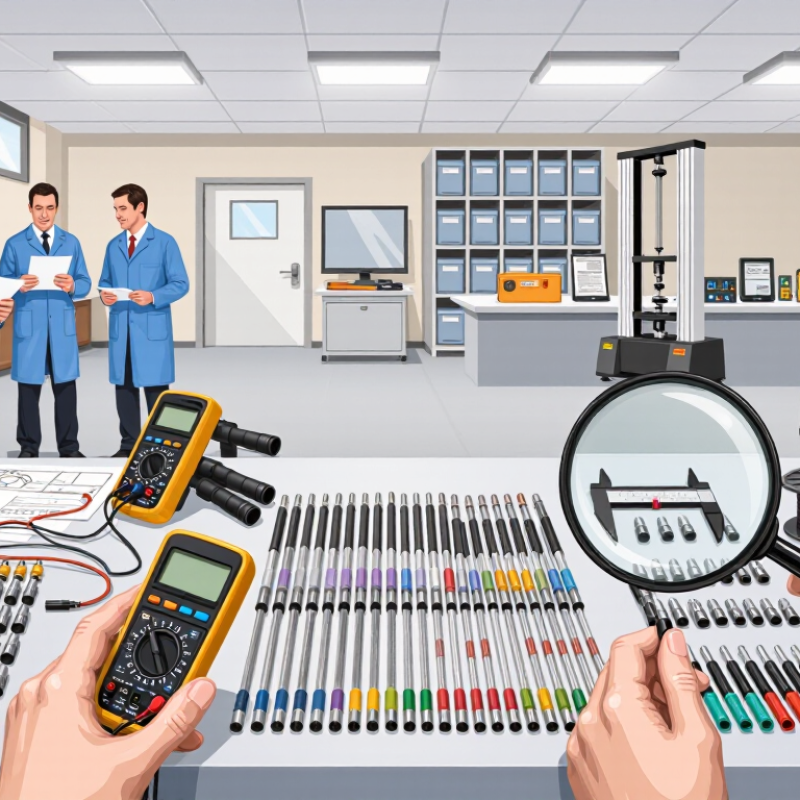
Define inspection expectations before requesting quotations. Specify continuity testing, insulation resistance checks, visual inspection, labeling, and packaging requirements. Ask whether the supplier can provide test records and sample assemblies. In practical engineering reviews, small omissions often cause larger problems than obvious design errors. The first specification is rarely perfect. Recheck connector orientation, wire length, and service loops with the installation team. Confirm relevant safety and quality requirements for the destination market. Clear requirements make supplier responses easier to compare and reduce avoidable changes during production.
7 Tips for Choosing Cable and Wire Harness Suppliers
Evaluate supplier expertise before comparing prices. Ask how long the team has handled similar cable assemblies. Review drawings, material specifications, tolerance controls, and testing records. A capable supplier should explain crimp height, pull-force testing, continuity checks, and shielding methods clearly. Tip 1: Request samples from the same production line used for future orders. A beautiful sample proves little.
Inspect the supplier’s quality system, not only its certificate wall. ISO 9001 can show structured processes, while sector-specific certifications may indicate deeper control. Verify certificate scope, expiry dates, and the actual manufacturing location. Ask how workers record defects, approve process changes, and trace material batches. Tip 2: Request a recent corrective-action report. It reveals whether problems are measured or simply discussed. I once trusted a polished audit presentation too quickly. The production records were less consistent than the meeting suggested.
Check inspection equipment and staff competence. Digital microscopes, pull testers, resistance meters, and documented calibration records support reliable results. Ask for first-article inspection reports and clear acceptance criteria. Tip 3: Visit the facility when practical. Watch wire stripping, terminal crimping, labeling, and final inspection. Small habits matter. Also examine communication during a technical disagreement. Reliable suppliers explain limits, admit uncertainty, and propose controlled trials. No system is perfect. Their response to a mistake often matters more than a flawless brochure.
| No. | Evaluation Tip | What to Evaluate | Recommended Evidence | Practical Verification | Suggested Weight |
|---|---|---|---|---|---|
| 1 | Confirm Technical Expertise | Assess experience with the required conductor types, insulation materials, terminals, connectors, shielding, overmolding, labeling, and assembly complexity. | Capability statement, engineering procedures, sample drawings, process flowcharts, equipment list, and relevant project references with confidential information removed. | Request a documented design-for-manufacturing review and verify that the supplier can control critical dimensions, crimp parameters, bend radius, pull force, and continuity requirements. | 15% |
| 2 | Review the Quality Management System | Determine whether the quality system covers document control, incoming inspection, process control, nonconformance handling, corrective action, calibration, internal audits, and customer complaints. | Valid quality certificate, quality manual or procedure index, audit summaries, corrective-action records, inspection plans, and calibration records. | Confirm that the certificate applies to the actual manufacturing site and relevant scope. Ask for examples showing root-cause analysis and verification of corrective-action effectiveness. | 15% |
| 3 | Verify Relevant Certifications | Match certifications to the application. ISO 9001 supports general quality management; ISO 13485 is relevant to medical-device quality systems; IATF 16949 is used in automotive supply chains. | Current certificates showing the issuing body, certificate number, site address, scope, issue date, expiry date, and applicable manufacturing activities. | Validate certificates through the issuing or accredited certification body where possible. Do not treat a certificate as proof that every product or process is covered. | 15% |
| 4 | Check Testing and Process Controls | Review controls for wire cutting, stripping, crimping, soldering, ultrasonic welding, continuity, hipot or dielectric withstand, insulation resistance, and final visual inspection. | Equipment qualification records, test methods, first-article inspection reports, control plans, statistical process records, and operator training records. | Compare the supplier’s test plan with the product specification. Confirm that measuring equipment is calibrated and that failed units are identified, segregated, and dispositioned. | 15% |
| 5 | Evaluate Material Compliance and Traceability | Confirm control of conductor, insulation, terminals, connectors, labels, heat-shrink tubing, shielding materials, and other components. Review environmental and regulatory requirements such as RoHS and REACH when applicable. | Supplier declarations, material certificates, certificates of analysis, approved-vendor lists, incoming inspection records, lot codes, and production traceability records. | Select a finished assembly and trace key materials back to receiving records and production orders. Verify that substitutions require documented customer approval. | 15% |
| 6 | Assess Capacity and Supply Continuity | Evaluate available production capacity, lead times, tooling resources, qualified personnel, maintenance planning, capacity expansion, and business-continuity arrangements. | Capacity overview, production schedule, lead-time assumptions, equipment-maintenance plan, contingency plan, disaster-recovery procedures, and sub-tier risk assessment. | Compare forecast demand with demonstrated output. Ask how the supplier will respond to demand increases, material shortages, tooling failure, labor disruption, or facility interruptions. | 15% |
| 7 | Compare Service, Communication, and Commercial Fit | Consider engineering response time, quotation clarity, change-control discipline, warranty terms, minimum order quantities, payment terms, logistics, and escalation procedures. | Completed request-for-quotation package, sample communication records, change-notification procedure, service-level commitments, logistics plan, and written commercial offer. | Use the same drawing revision and requirements for all suppliers. Score response completeness, technical questions, sample quality, delivery performance, and total landed cost. | 10% |
| Total Suggested Evaluation Weight | 100% | ||||
Material comparison should begin with the operating environment, not the lowest quotation. Copper offers excellent conductivity, while aluminum reduces weight but needs careful termination control. Polyvinyl chloride suits general applications; cross-linked polyethylene handles higher temperatures. The correct choice depends on heat, moisture, abrasion, voltage, and bending cycles. Grand View Research estimated the global wire and cable market at over USD 200 billion in 2023, showing how broad these requirements have become.
Ask suppliers for measurable evidence. Their processes should cover cutting, stripping, crimping, soldering, overmolding, electrical testing, and traceability. IPC/WHMA-A-620 provides widely recognized acceptance criteria for cable and harness assemblies.
A capable supplier should explain terminal pull-force results, continuity testing, insulation resistance, and sample approval procedures. Ask for process records.
Customization is more than changing cable length. It may involve connector orientation, branch geometry, labels, shielding, flexible jackets, or small-batch prototypes. A supplier with automated crimp monitoring can improve consistency, but automation is not always better for complex, low-volume assemblies.
I have seen drawings appear complete while missing bend-radius limits and service-loop space. That mistake is costly. Require a manufacturability review before tooling, and challenge any specification that lacks test limits.
Choosing a cable and wire harness supplier requires more than comparing unit prices. Verify production capacity on the actual line. Ask for monthly output, available shifts, trained operators, crimping machines, testers, and maintenance records. Review capacity utilization during peak periods. A supplier running at 95% capacity may accept your order, but struggle with urgent changes. Request recent on-time delivery data, not a polished forecast. World Bank’s 2023 Logistics Performance Index reported that only about 60% of shipments arrived on time globally. Delays remain normal.
Lead times should be separated into materials, production, inspection, and transport. Confirm the lead time for terminals, insulation, connectors, and custom tooling. Ask how the supplier handles shortages. Can it reserve critical components? Does it maintain approved alternatives? A practical mistake is trusting one impressive pilot run. Production may change after volume increases. Require a capacity plan, sample approval timeline, and escalation contact. Keep the questions uncomfortable.
Supply chain reliability depends on visibility beyond the factory gate. Request a tier-two supplier map and evidence of alternate sources for critical materials. McKinsey’s global supply chain survey found that 93% of leaders planned to strengthen resilience after major disruptions. That figure supports dual sourcing, but dual sourcing is not automatically reliable. Check whether both suppliers use the same vulnerable material source. Review quarterly delivery performance, corrective-action records, inventory policies, and business-continuity tests. A neat spreadsheet can still lie. Small audit findings often reveal bigger weaknesses.
7 Tips for Choosing Cable and Wire Harness Suppliers?
A competitive quote is only the starting point. Compare landed cost, tooling, testing, packaging, freight, and engineering-change fees. A lower unit price can hide expensive delays. McKinsey’s 2020 supply-chain survey found that 93% of leaders planned to increase resilience, while 90% expected to pursue regionalization. Ask whether the supplier can protect capacity during shortages. Ask for evidence. Review response times, escalation routes, and named technical contacts. Silence is costly. Weekly updates should include production status, material risks, inspection results, and corrective actions.
Support becomes visible when drawings change. Check whether the supplier uses controlled revisions, first-article approvals, and traceable test records. Request sample documents before signing. The World Bank’s 2023 Logistics Performance Index used 4,090 assessments across 139 economies, highlighting tracking, timeliness, and service reliability. These measures matter for harness programs with fixed installation dates. Pricing still matters. I sometimes overvalue it when schedules feel tight. That bias deserves review. Score communication and support beside cost, not after it.
Long-term partnership potential requires practical proof. Examine capacity plans, technician training, backup processes, and response commitments. Discuss forecast flexibility without promising unrealistic volumes. A strong supplier should explain problems early, not decorate bad news. Include quarterly business reviews, audit access, engineering support, and measurable service targets. The best relationship is not always the friendliest one. It is the one that remains transparent when a connector fails, a drawing changes, or demand drops unexpectedly.
Suggested evaluation weighting for reviewing pricing, communication, technical capability, quality, support, and long-term partnership potential.
Technical quality and delivery reliability receive the greatest weight because they directly influence product safety, production continuity, and total procurement risk. Pricing remains important, but it should be evaluated together with quality, support, and long-term value.